Allesamt – A House For Childern In A Pinegrove
Nenzing, Austria – Christian Schmoelz Architect
As is the case everywhere, demand for childcare and, beyond that, advice and support for families is growing in Nenzing too. Close to the town centre, the market town has now combined these two functions in one building: the ‘Allesamt’ family centre with childcare, a nursery and a spacious advice area for parents and families. The striking timber building is located just before the town’s railway station, directly next to the railway line.
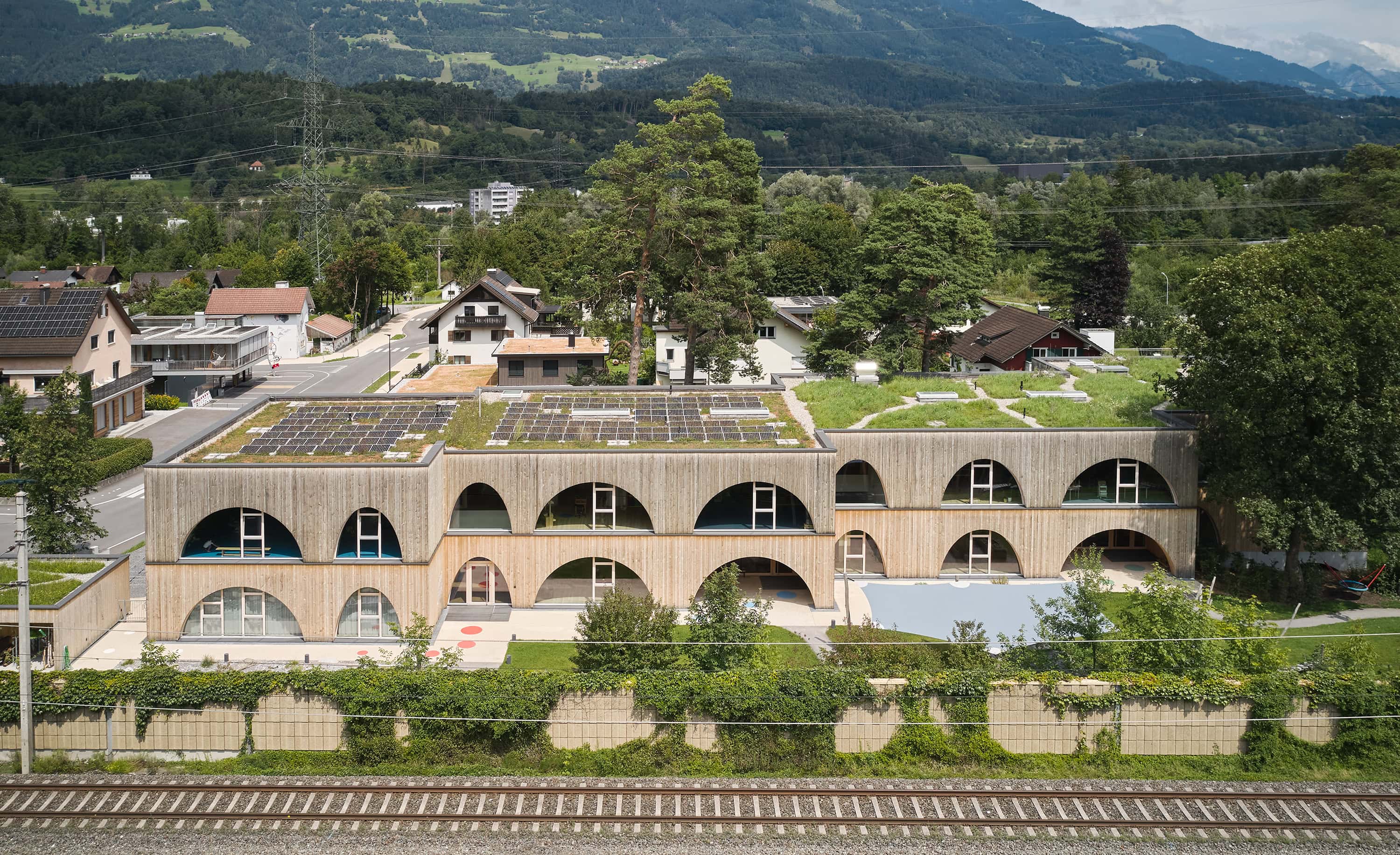
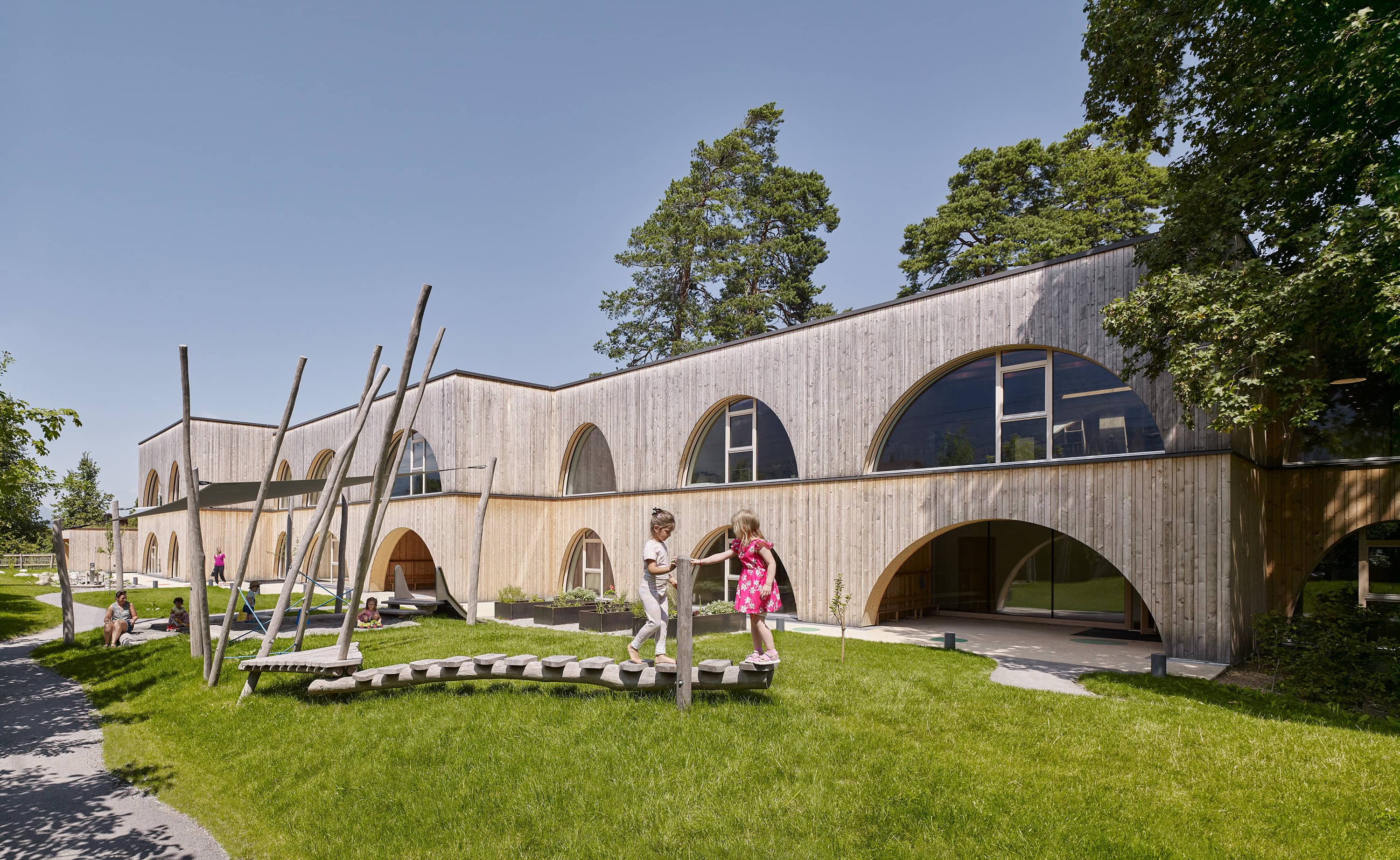
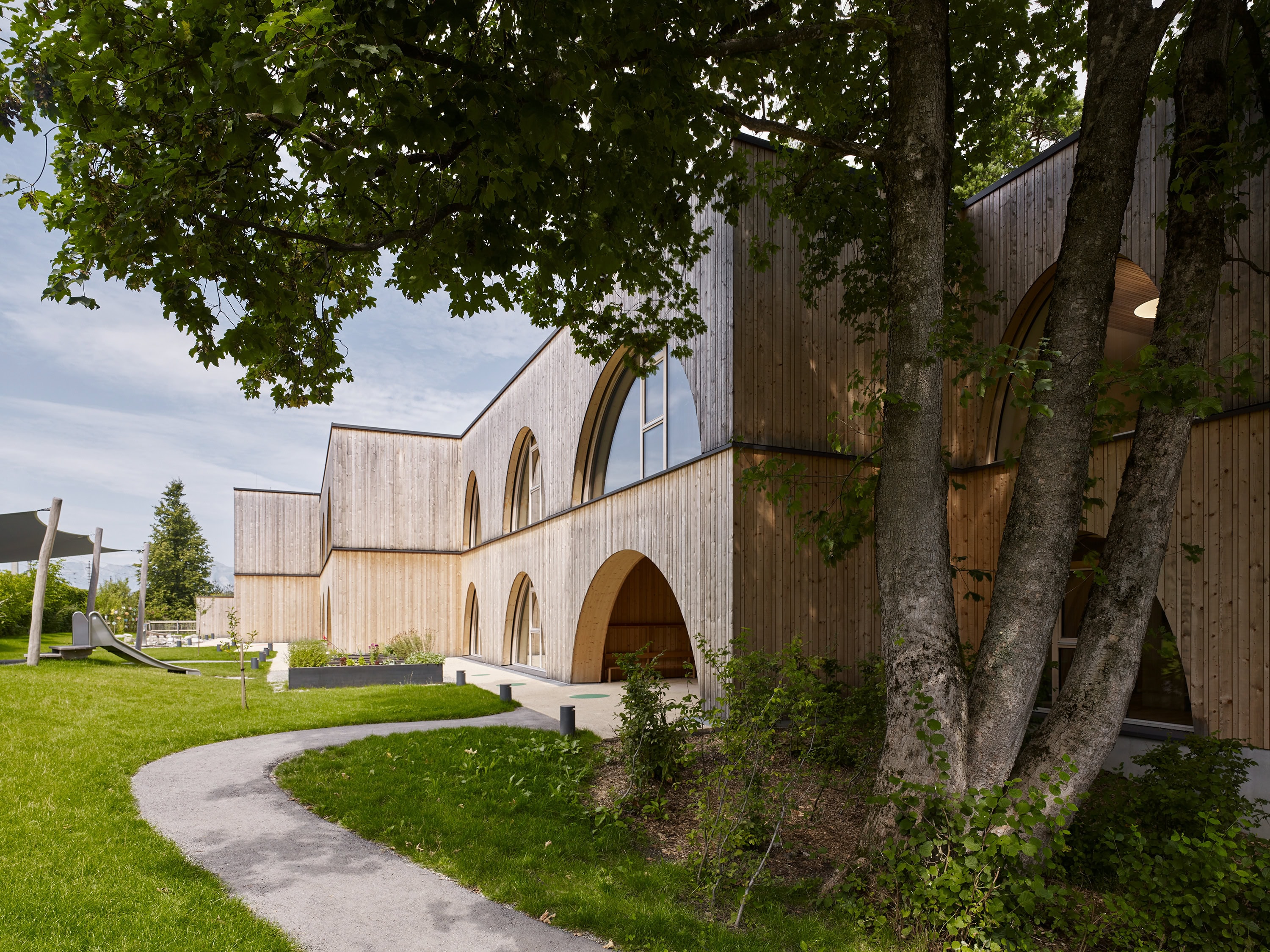
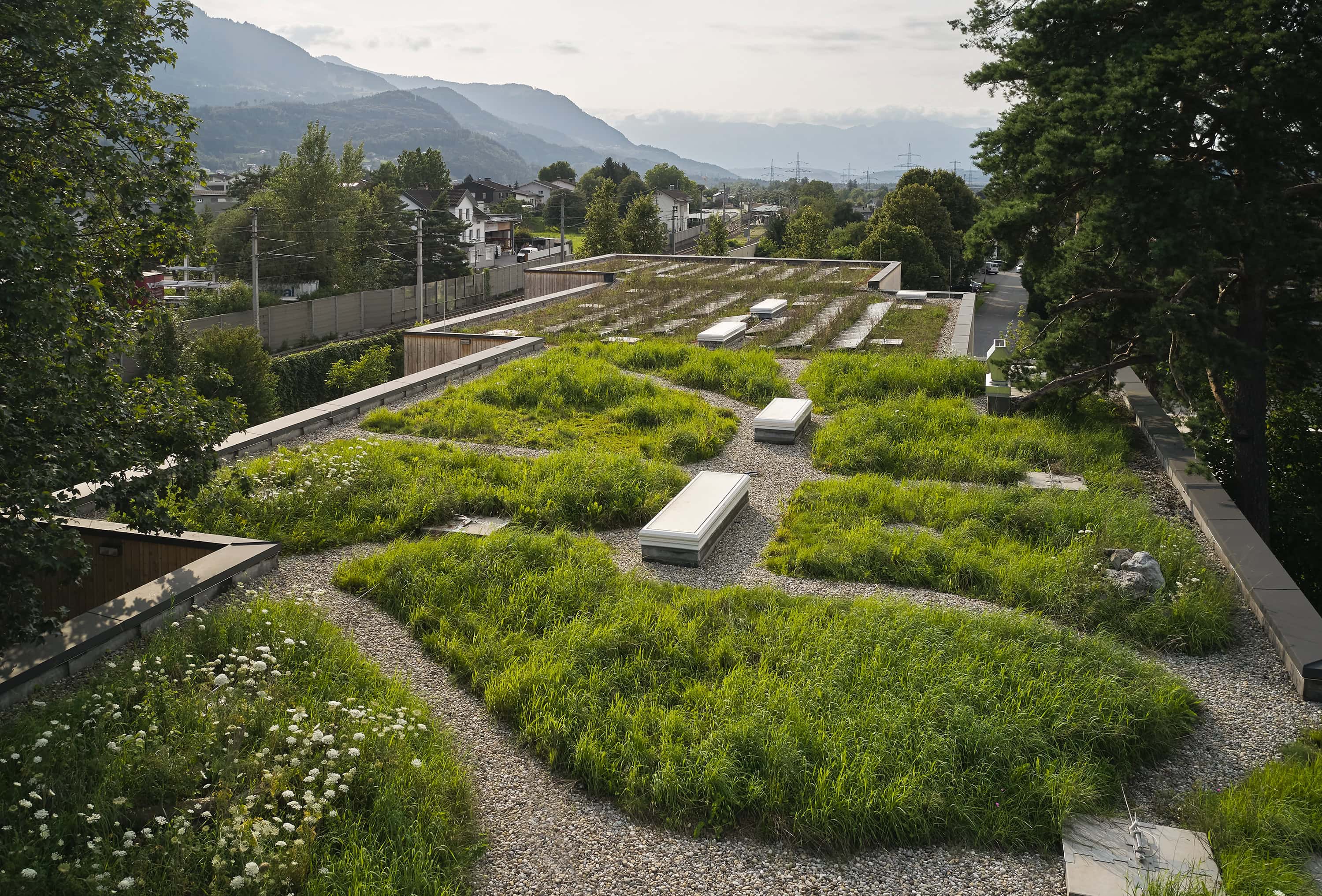
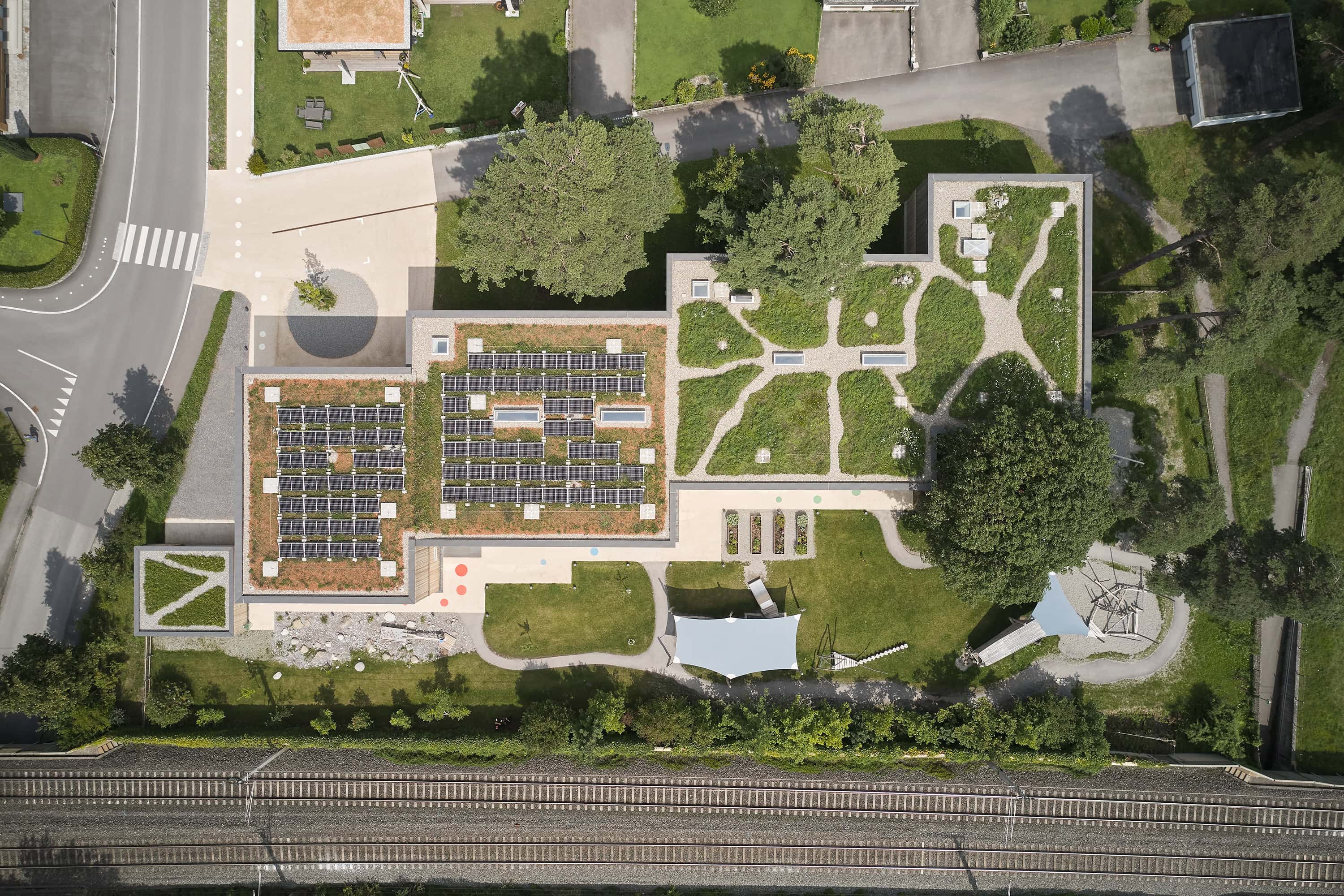
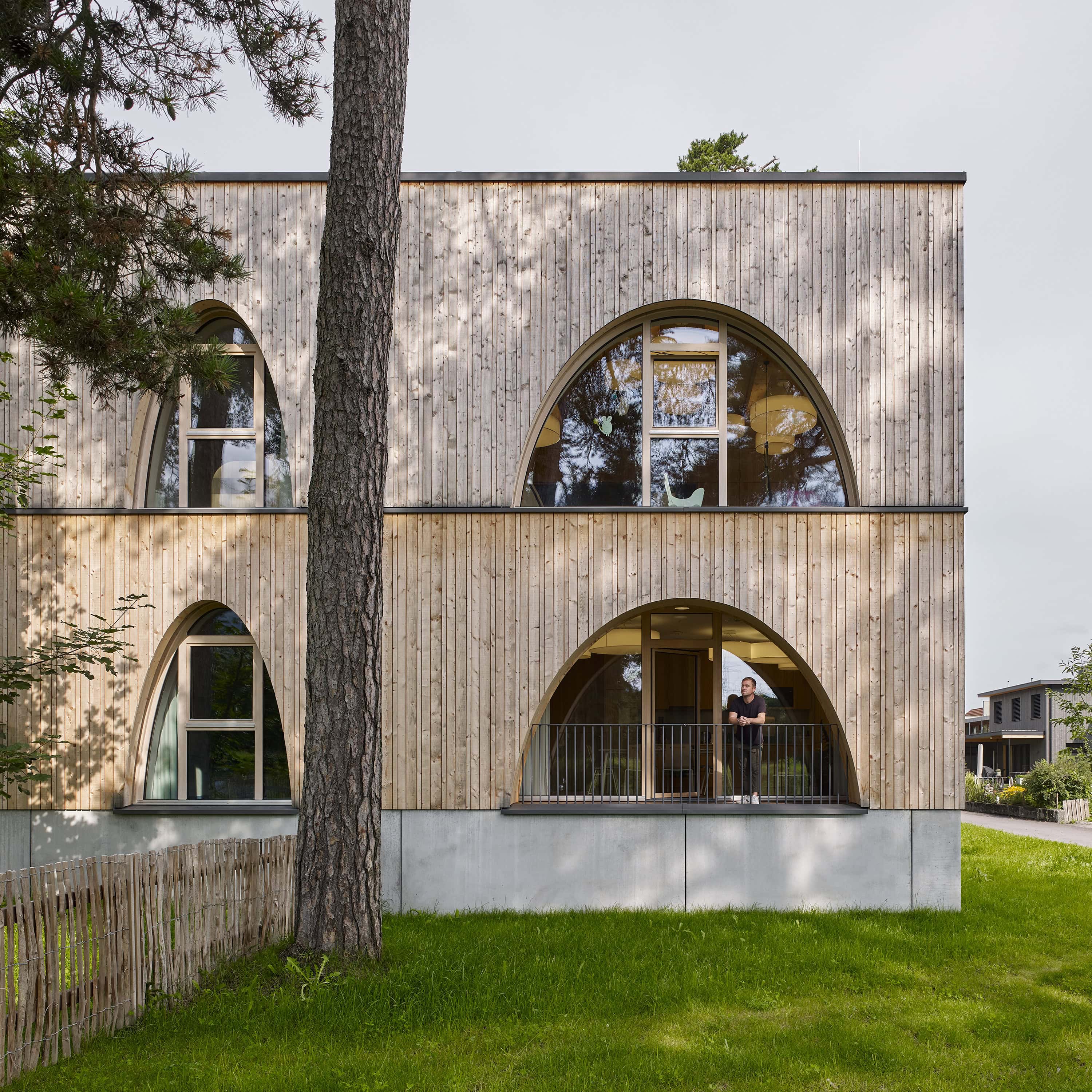
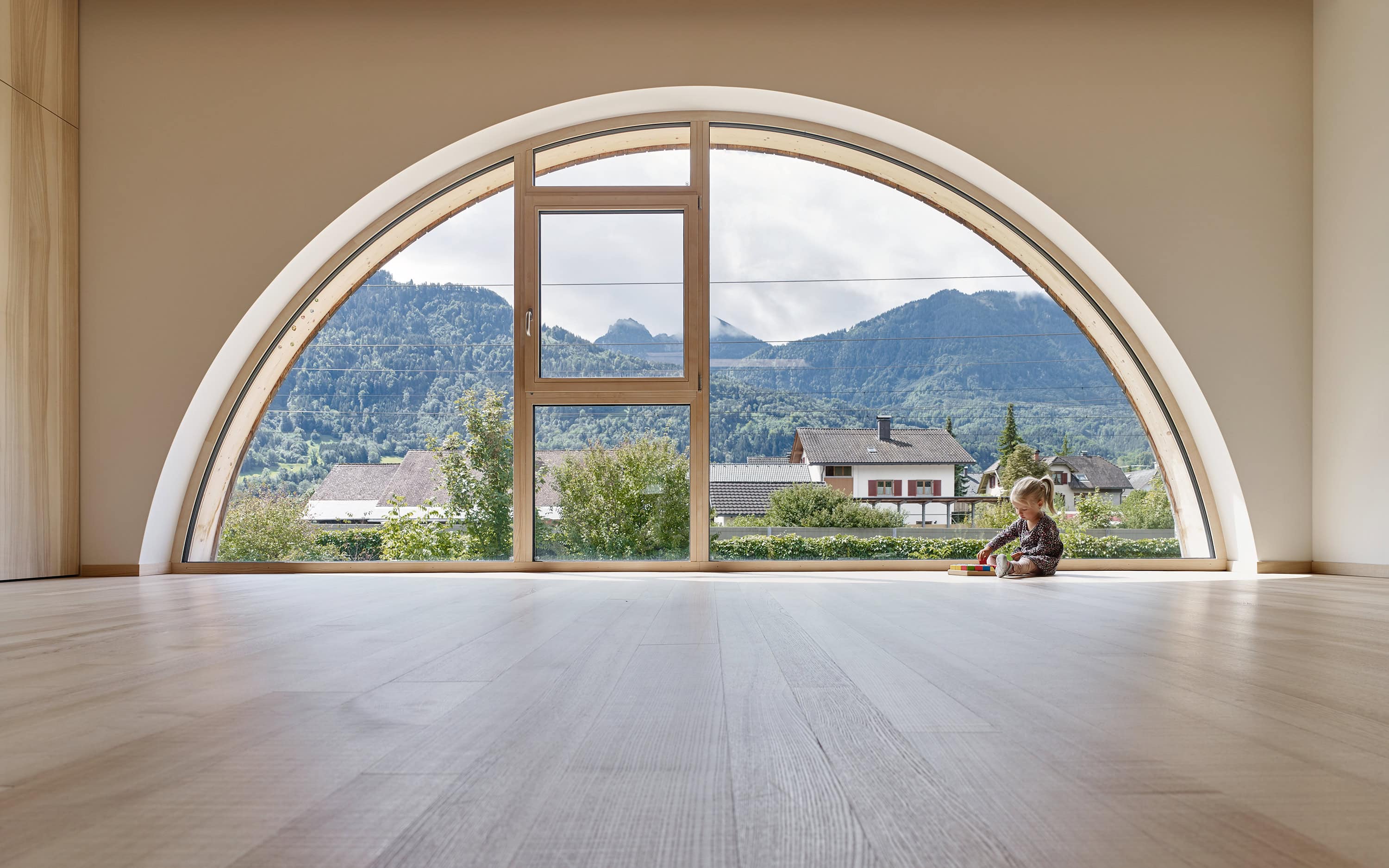
In addition to the as-yet unweathered spruce façade, the arched windows and distinct recesses immediately catch the eye. The elongated structure is visually divided into four smaller volumes. This design approach serves two primary purposes: firstly, it allows the large structure to blend harmoniously with its surroundings, which are otherwise dominated by single-family homes. Secondly, it allows the design to respond to the mature maple and pine trees on the property, particularly to the north and east. This underscores that the design of the outdoor space is an integral part of the overall concept.
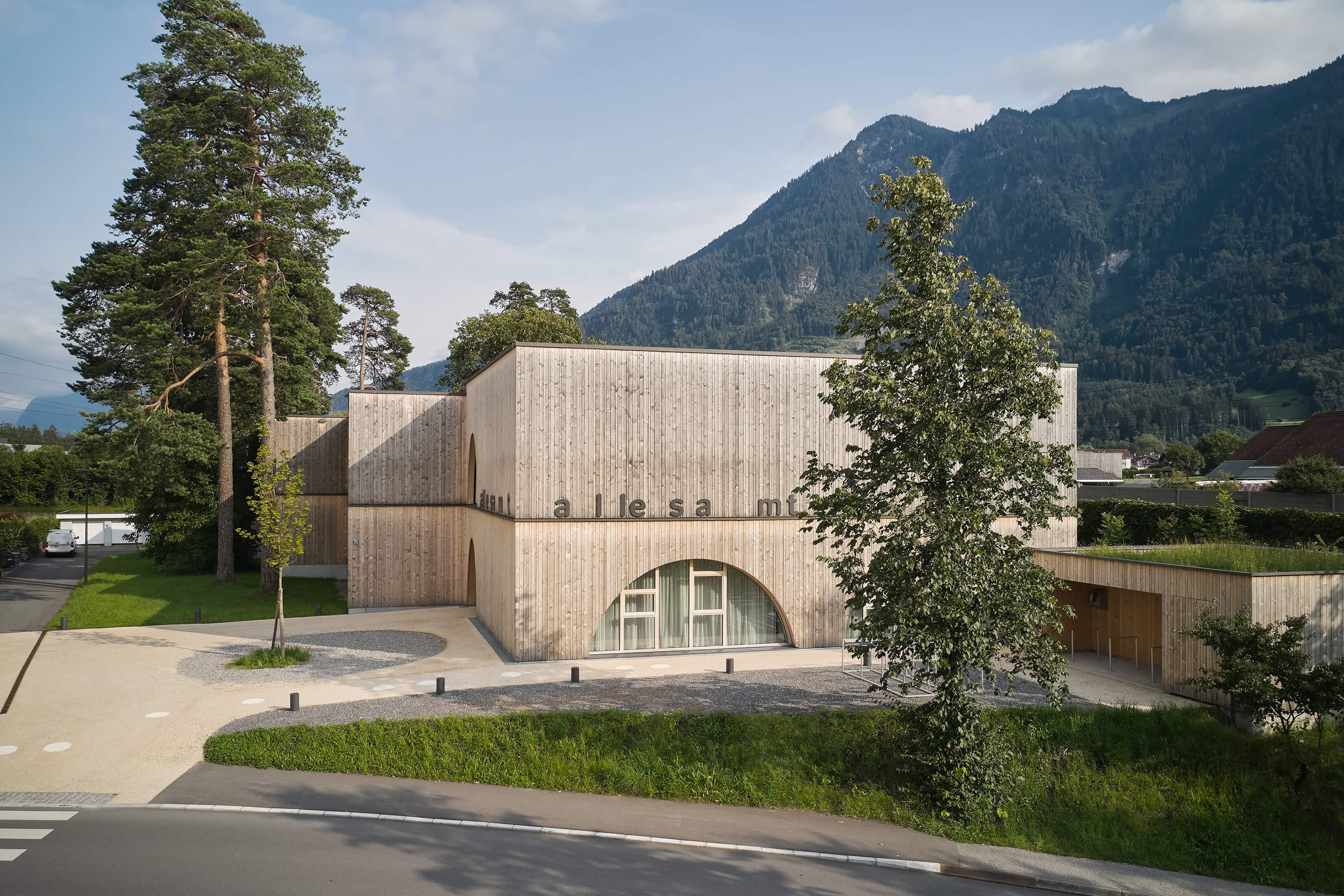
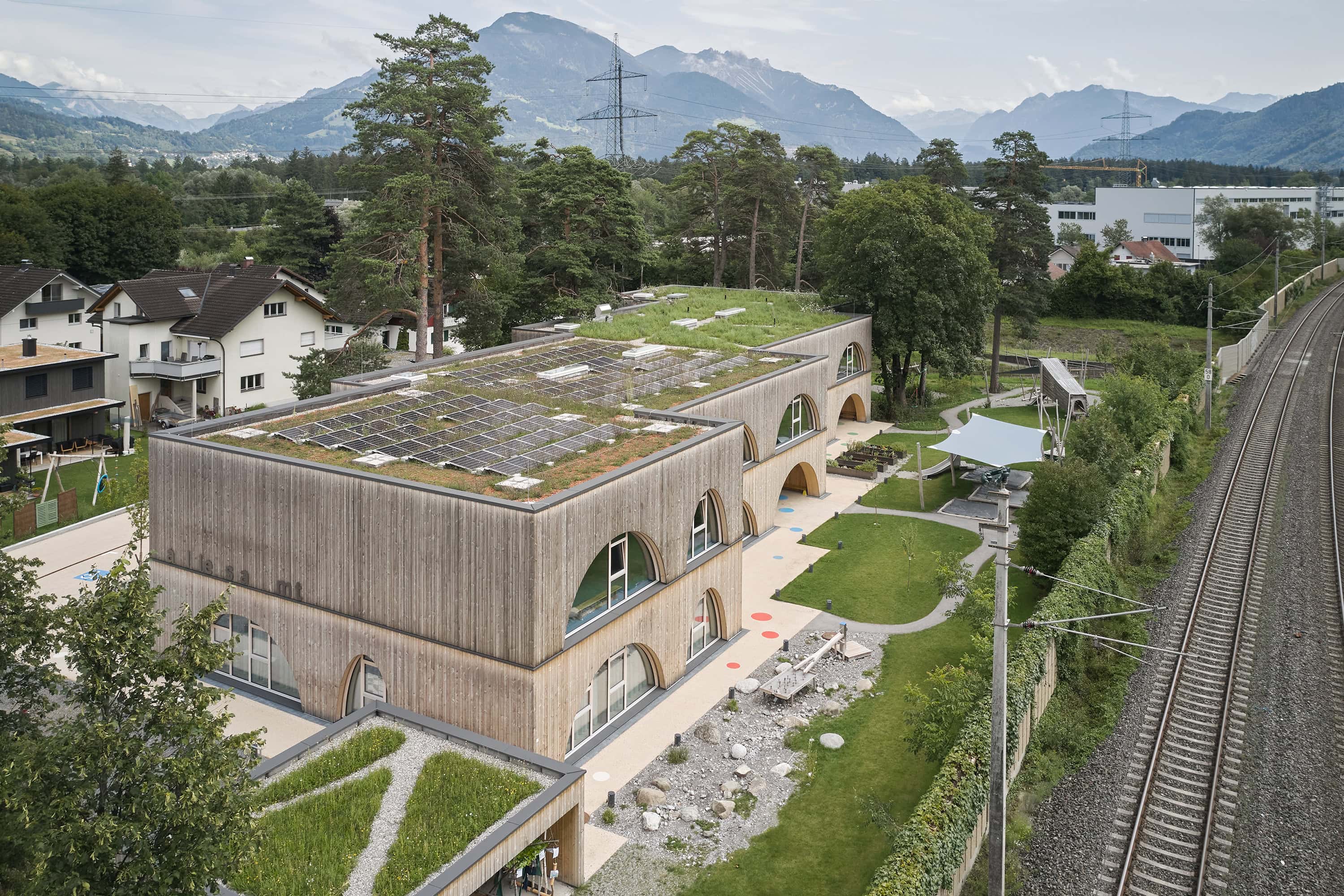
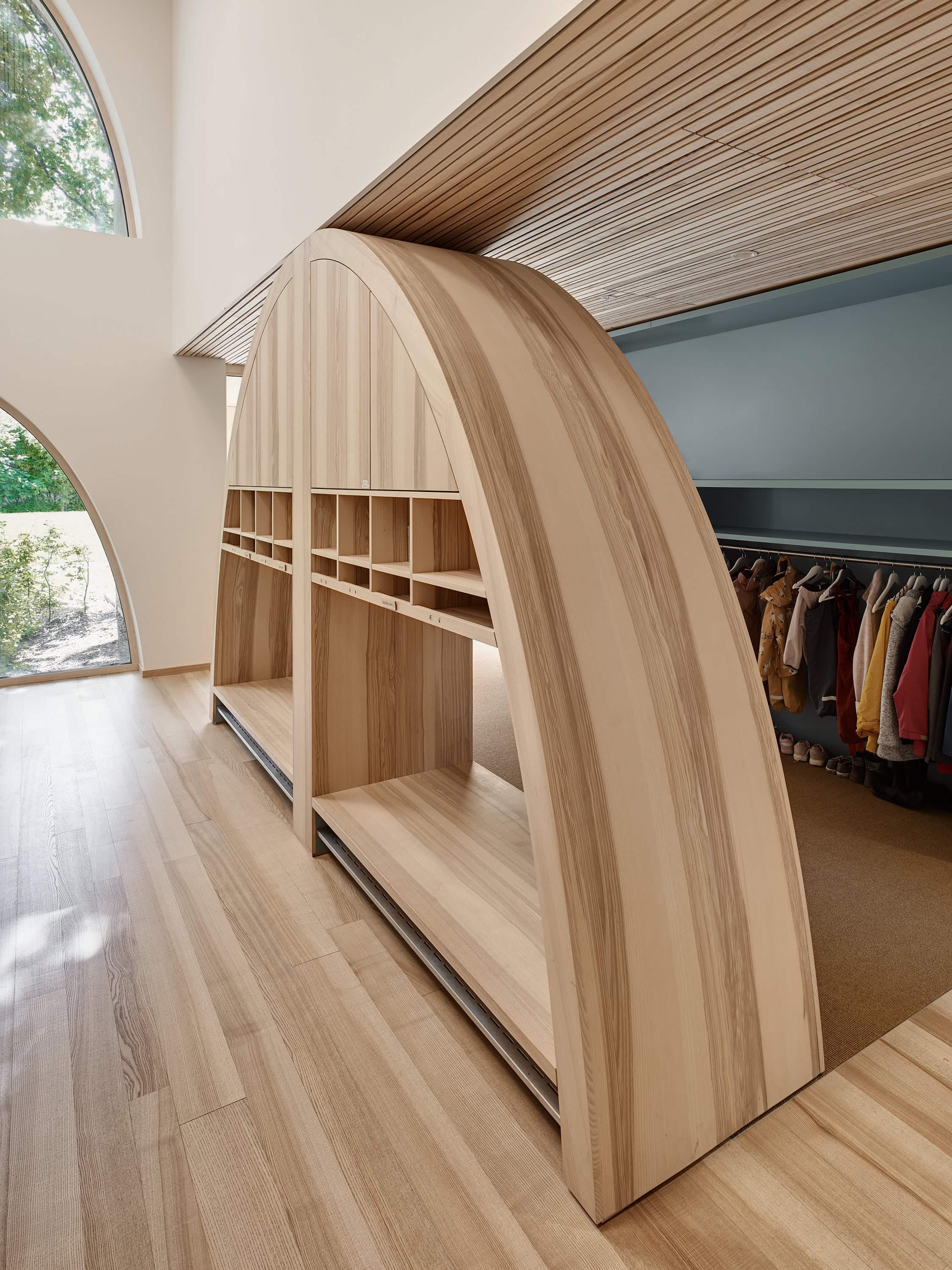
The route for the children is marked out with new light-coloured pavement and circular floor markings set at decreasing intervals, extending well beyond the property boundary. The dots and paving lead past the bicycle parking spaces to the playground. From here, the children enter their respective houses via three entrances and three cloakrooms.
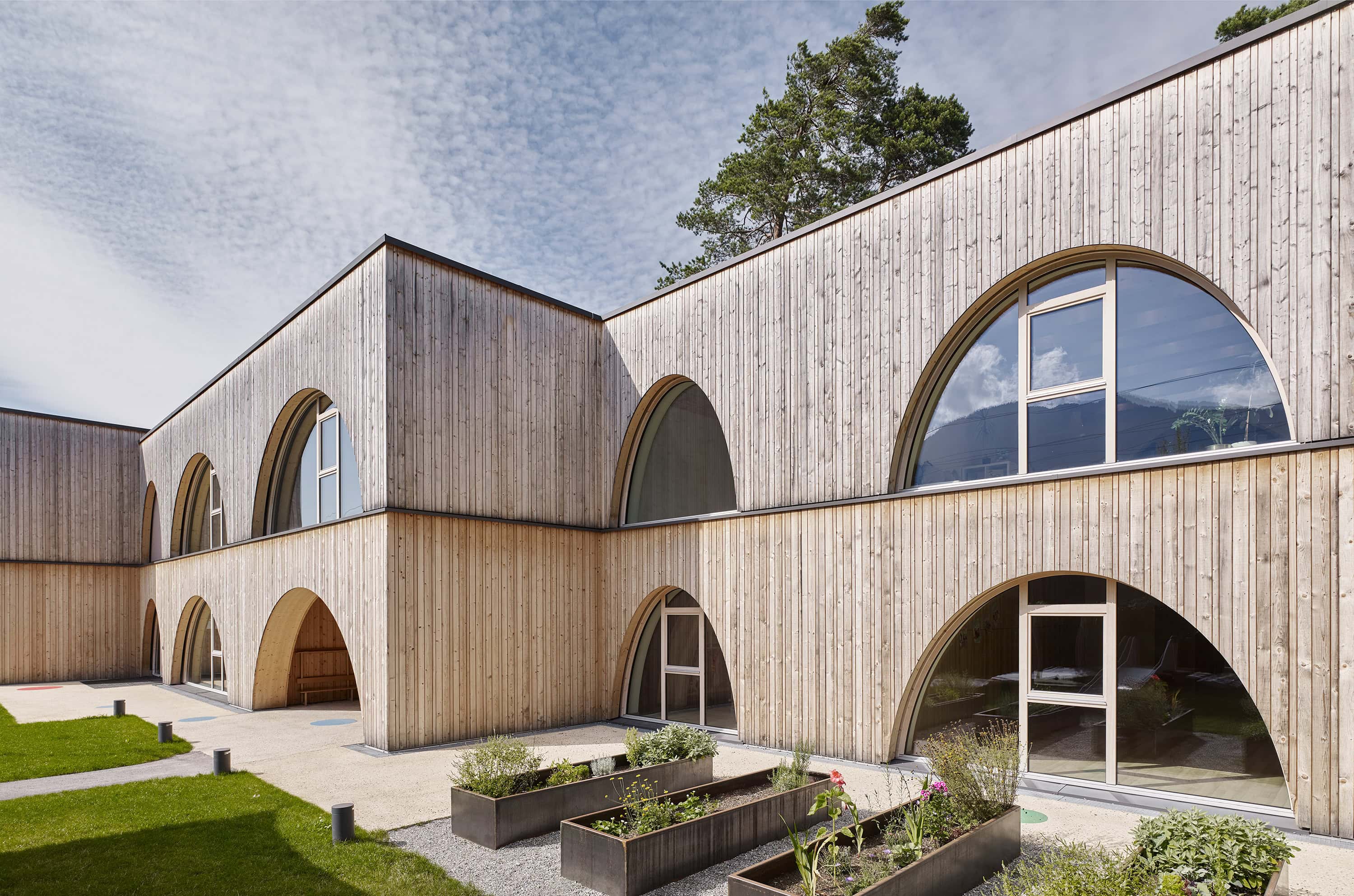
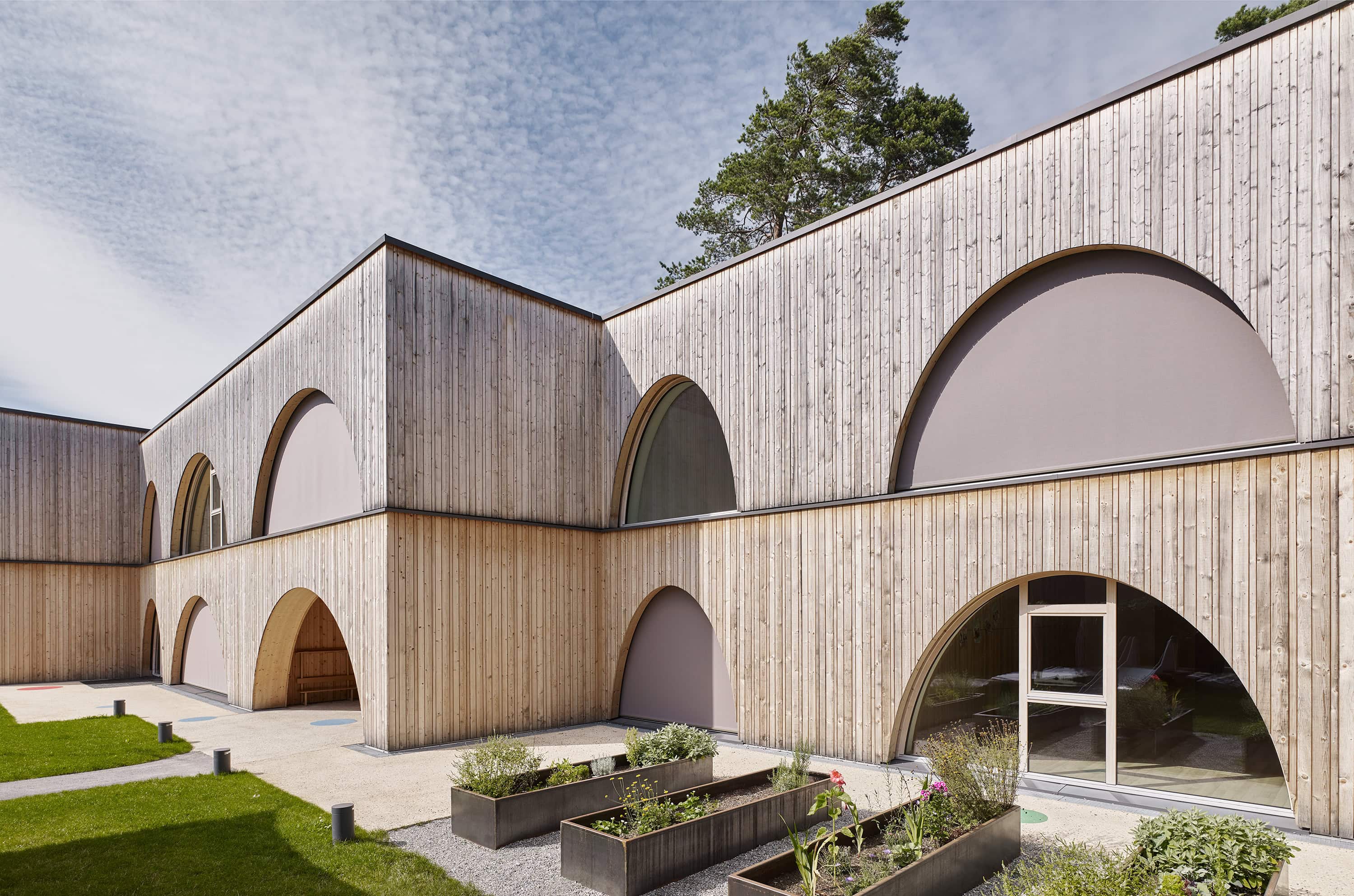
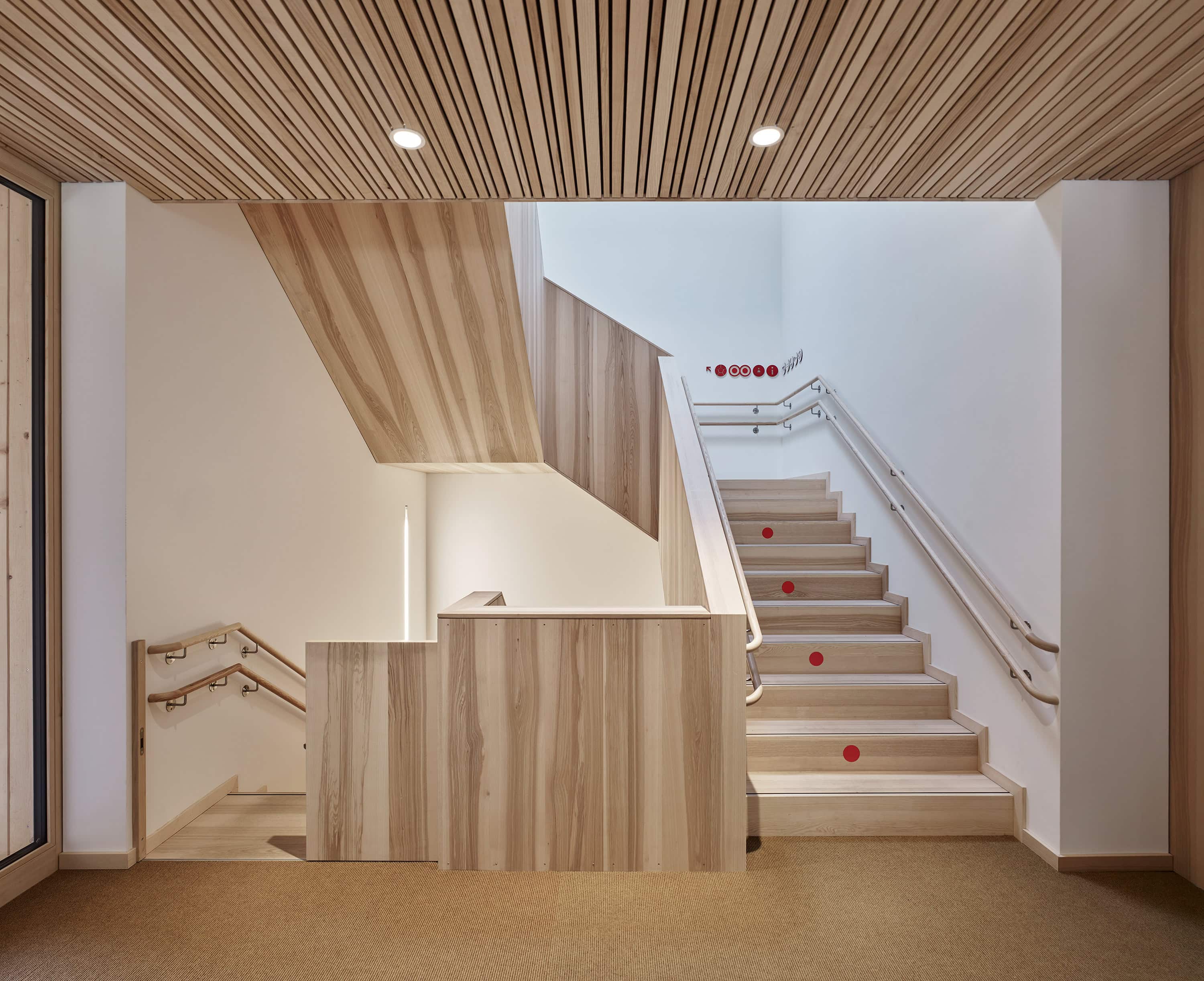
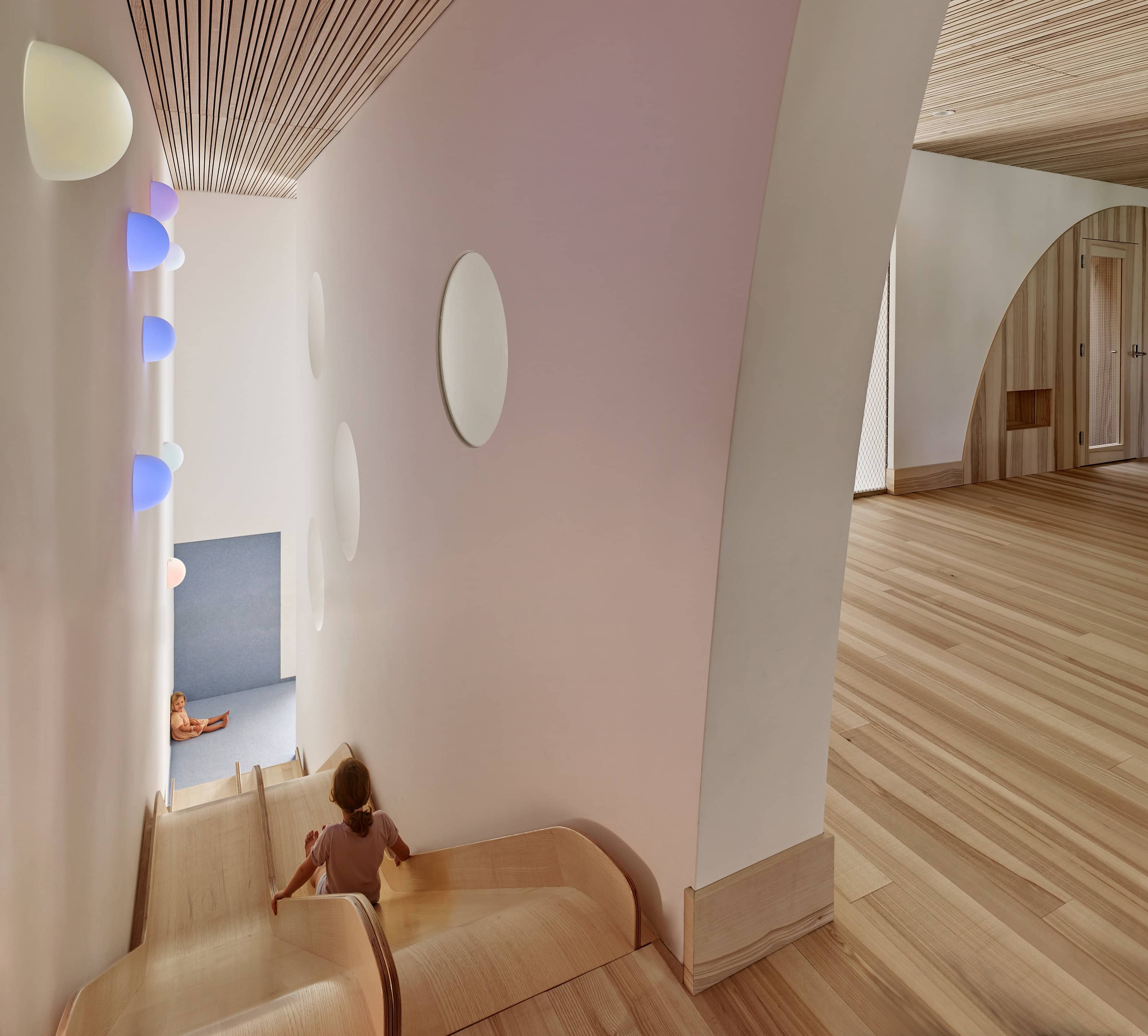
Unusually, the children’s play and recreation area is located on the first floor. It is considered vital that children also learn to navigate stairs. With the support of fall protection measures and, above all, educators who view the multi-storey layout as a spatial and pedagogical asset, it is difficult to justify a single-storey nursery building and the increased footprint this would entail. As a result of this decision, almost all themed rooms are located on one level and align perfectly with the educational concept: rather than being assigned to a fixed group, the children can move freely across the entire floor.
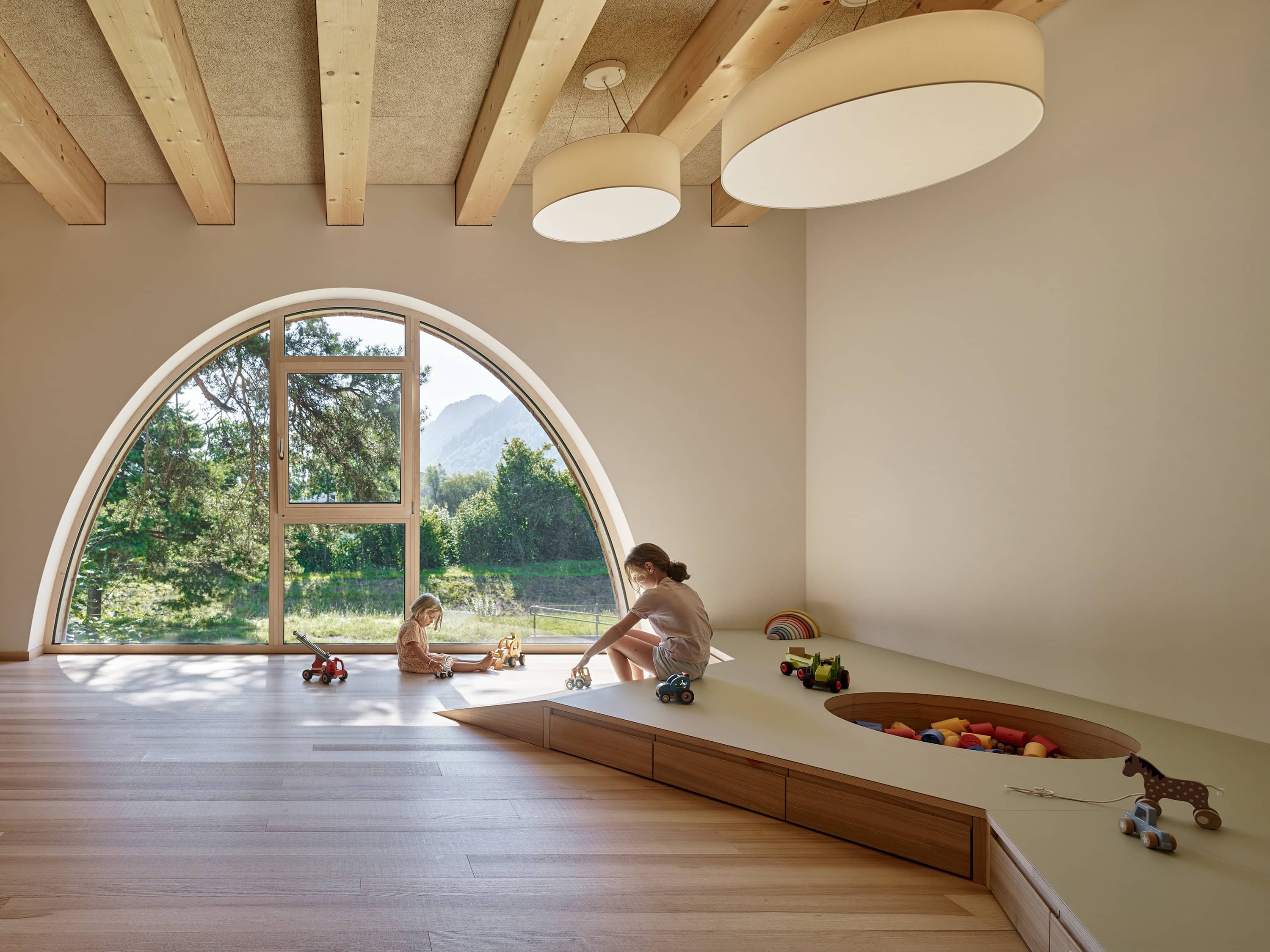
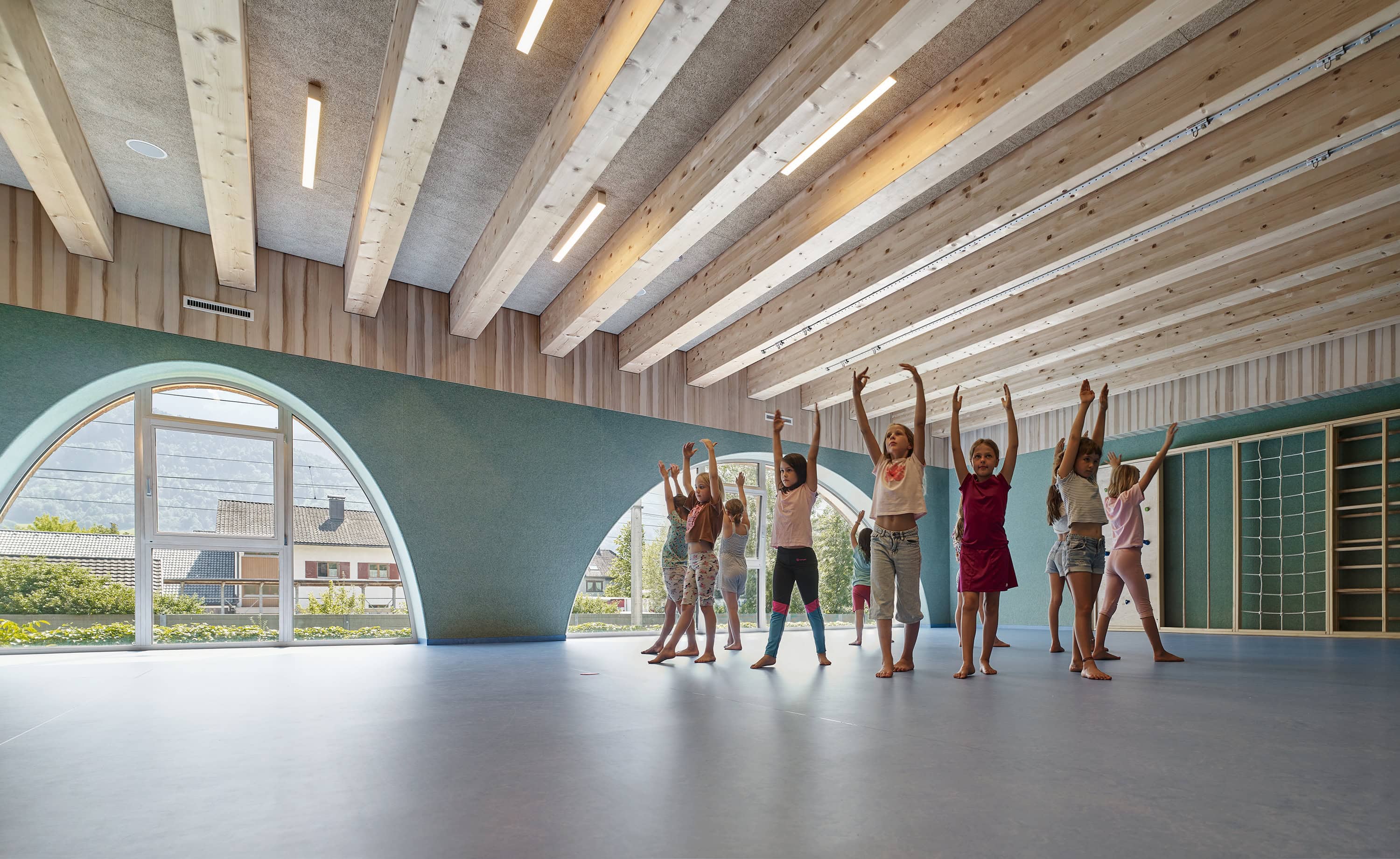
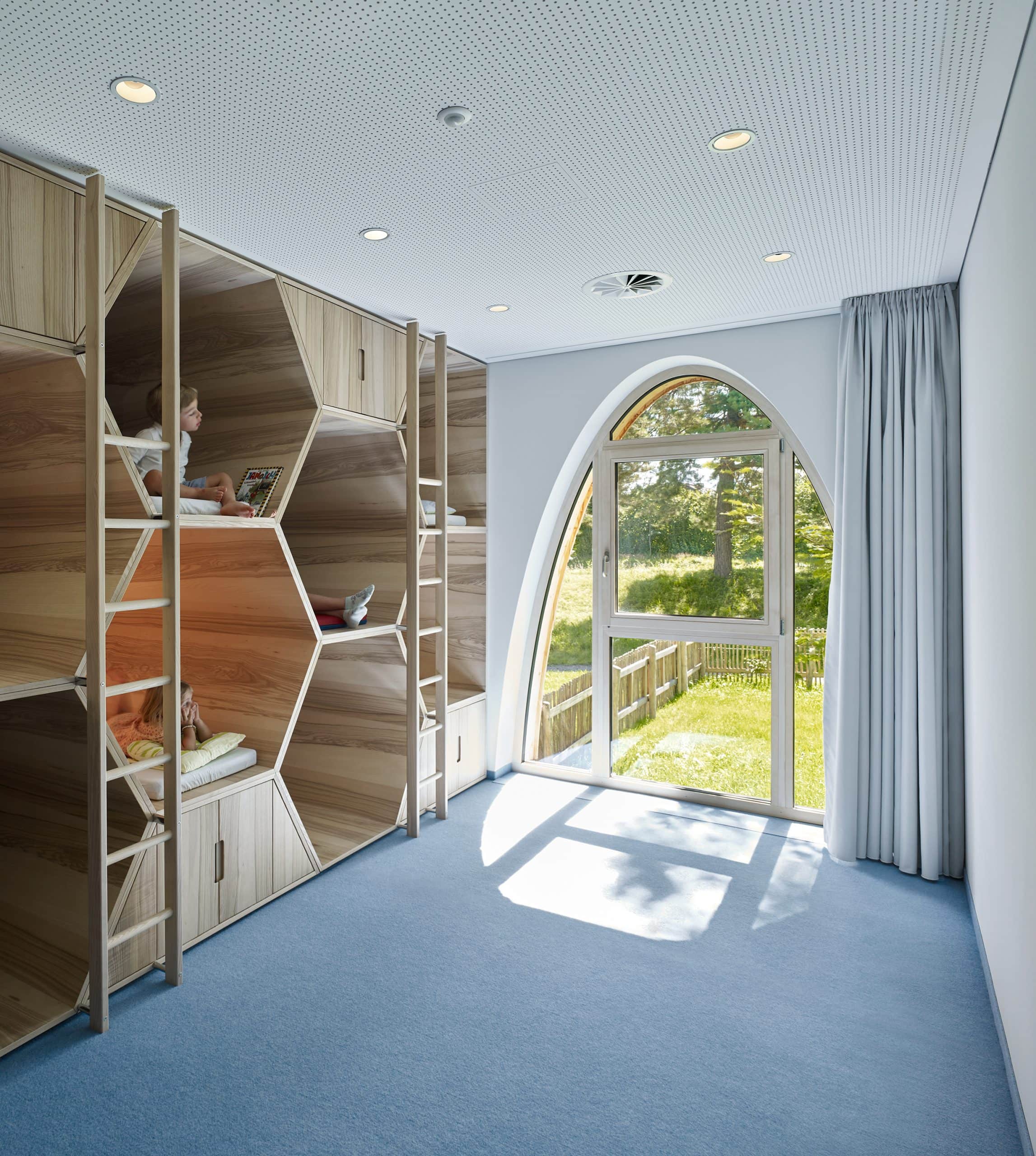
The other ancillary and supporting rooms are located on the ground floor. To the west, with its own access from the forecourt, is the counseling center run by the municipality and Connexia (a social service provider). Adjacent to this are the staff entrance, dining and kitchen areas, restrooms, a workshop and, at the eastern end, a staff lounge and the sleeping area for the youngest children.
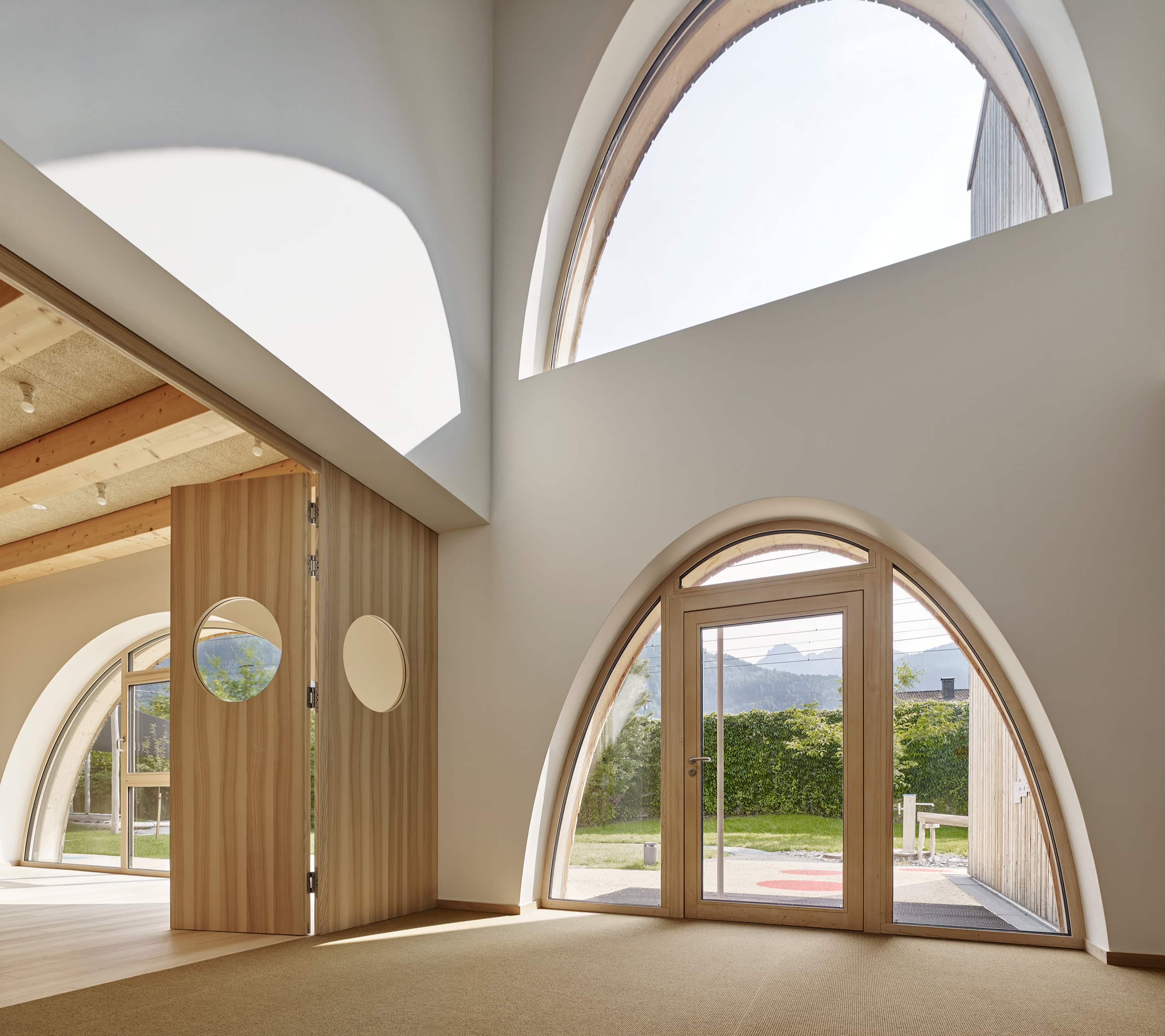
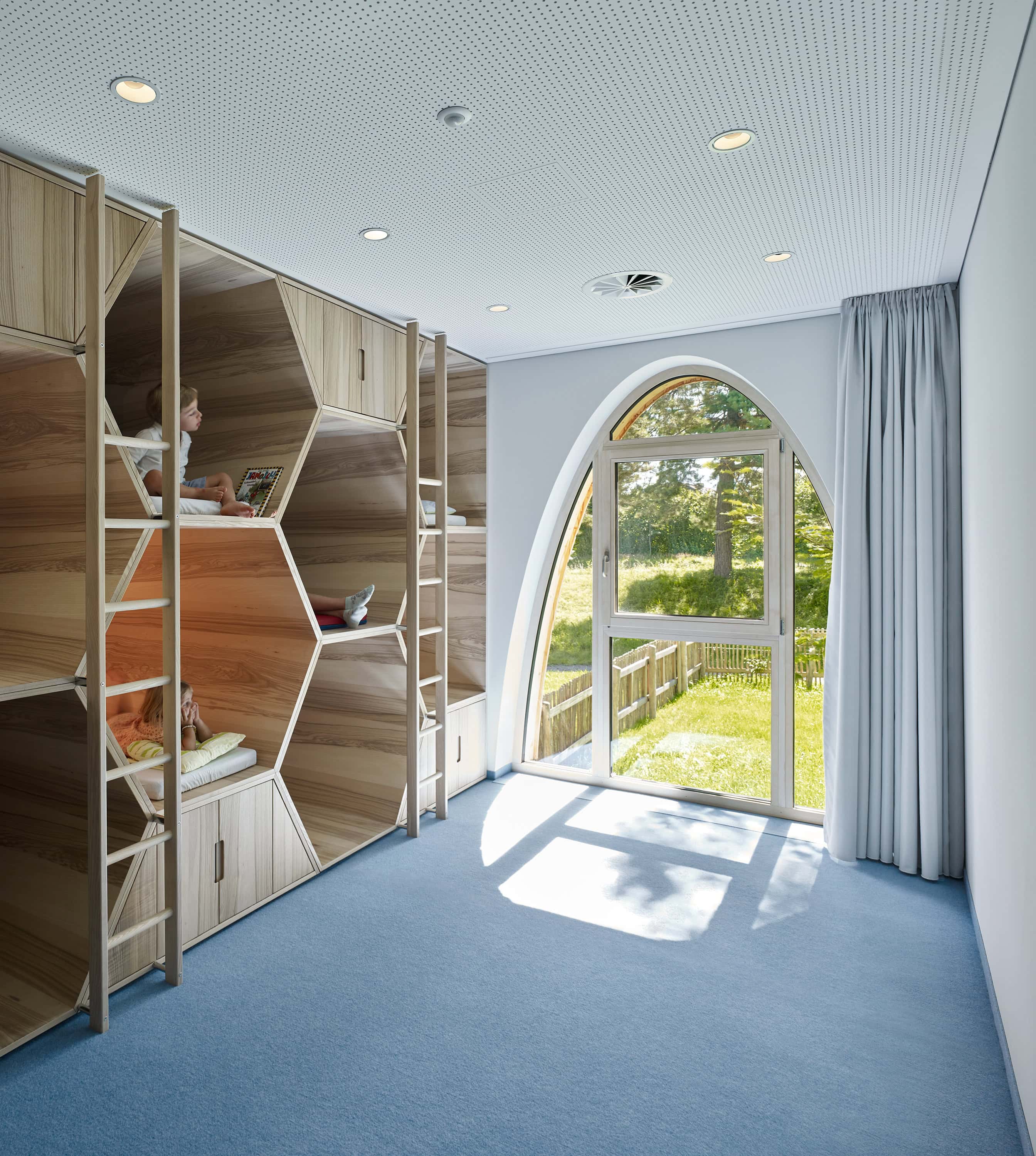
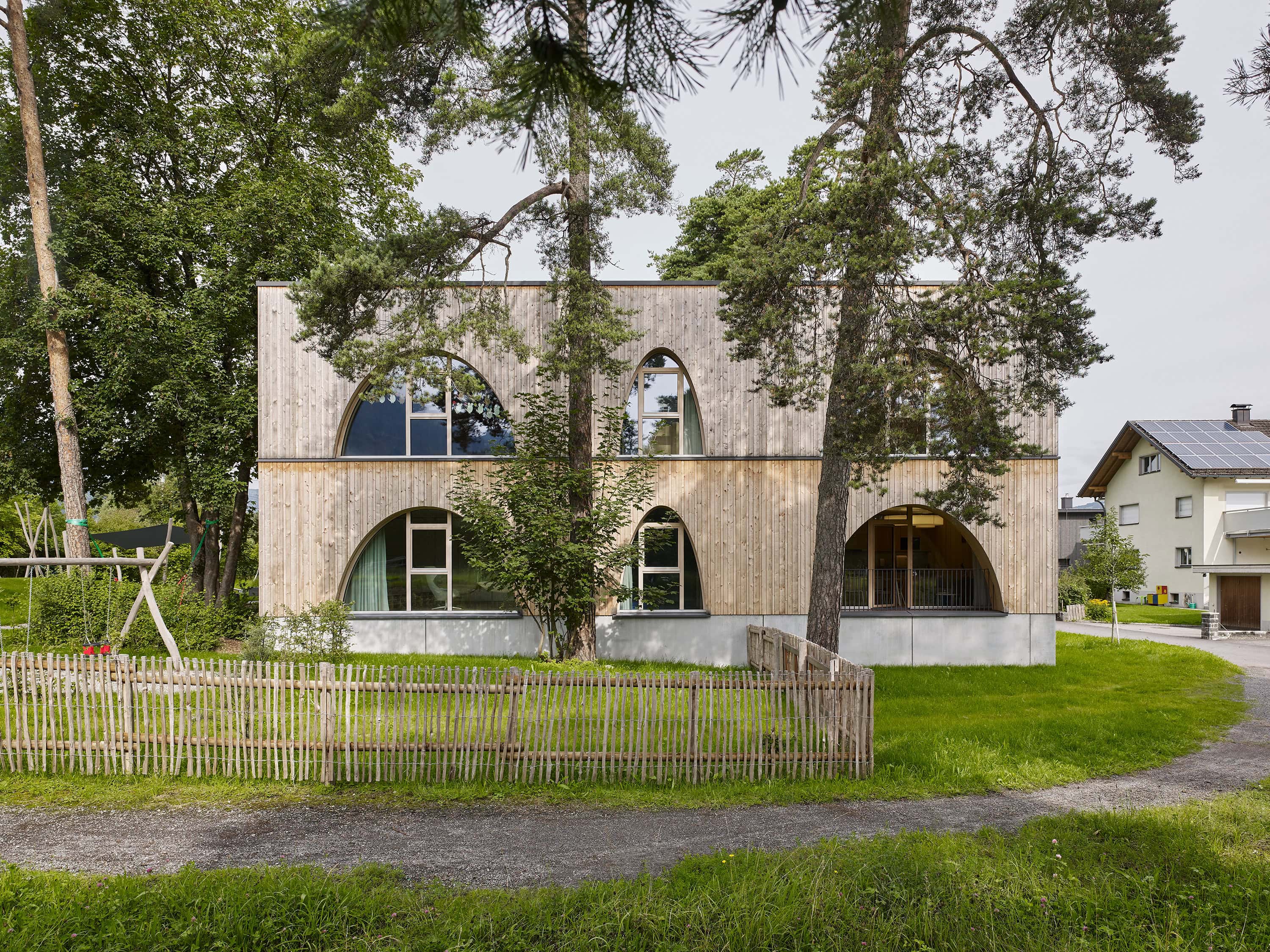
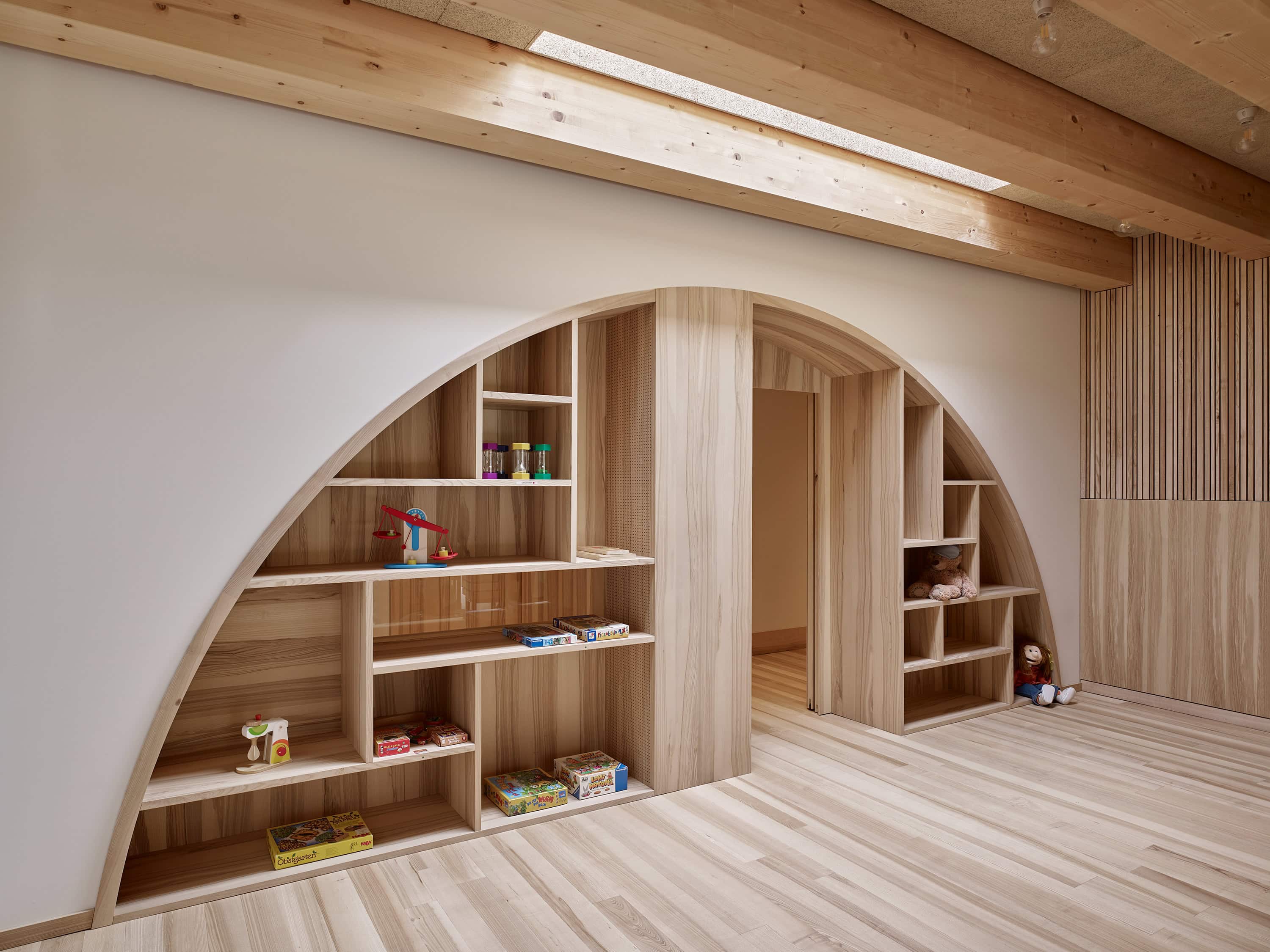
The structure is a timber frame construction built upon a reinforced concrete basement. The windows and façade cladding are made of spruce, while ash wood dominates the interior: on the floors, in the wall panelling, and in the built-in furniture. Finally, it is worth noting the impressive 936 points (out of a possible 1,000) achieved in the Municipal Building Certificate (KGA), as well as the exemplary cooperation between the client, the users, and the architects. Functional, spatial, and design decisions were always made in close consultation.
Text: Clemens Quirin